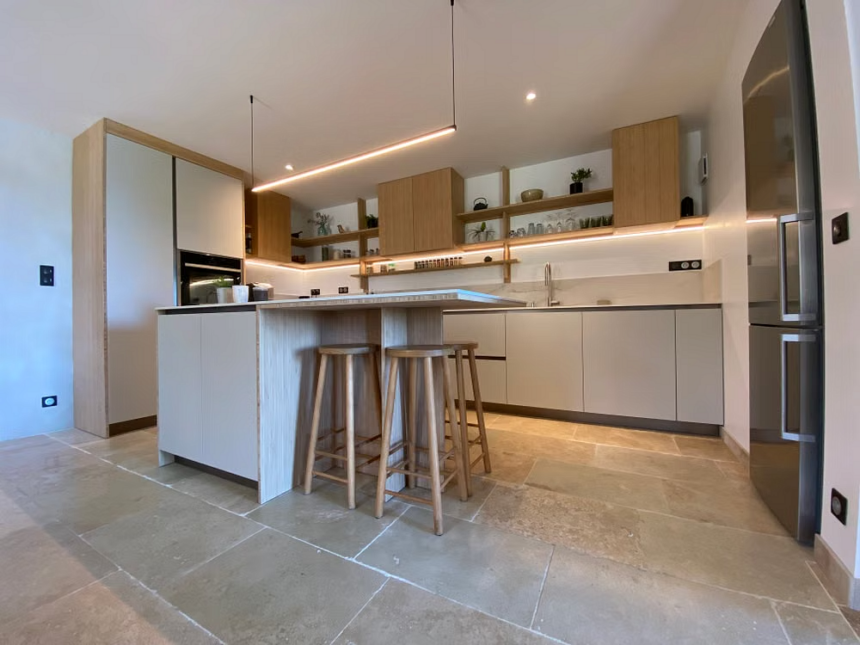

Limestone has a timeless quality that explains why it remains one of the most popular choices for kitchens, hallways, bathrooms and open-plan living spaces. Its soft, natural appearance suits both period homes and contemporary interiors, adding warmth that manufactured flooring often struggles to replicate.
Yet many homeowners are surprised when their beautiful floor starts looking tired far sooner than expected. The stone loses its gentle sheen, stains become more noticeable and fine scratches seem to appear from nowhere. Most assume this is simply what happens as limestone ages, but in many cases the real issue is not the stone itself. It is the way it has been cared for.
The biggest mistakes are usually made with good intentions. Popular cleaning advice found online, supermarket products marketed as suitable for natural stone and well-meaning DIY repairs can all shorten the life of a limestone floor rather than preserve it.
Everyday habits that quietly wear limestone down
Limestone is a natural material with a porous structure. Unlike ceramic tiles or engineered flooring, it absorbs moisture and reacts differently to cleaning products. That means maintenance routines suitable for other surfaces are not always appropriate here.
One of the most common errors is using acidic cleaners. Products containing vinegar, lemon extracts or strong descaling ingredients may seem like effective cleaning solutions, but they slowly react with the calcium carbonate found in limestone. Over time, this chemical reaction leaves dull patches that cannot simply be wiped away.
Another overlooked issue is excessive water. Many homeowners believe that using more water means a cleaner floor, yet moisture can penetrate the stone if protective sealants have begun to wear away. This can encourage staining, particularly in busy kitchens where food spills, oils and drinks are part of everyday life.
Abrasive scrubbing pads also contribute to unnecessary damage. While they may remove stubborn marks in the short term, they gradually scratch the surface, making the stone appear older and allowing dirt to settle more easily into tiny imperfections.
Even ordinary household dust has an impact. Fine particles of grit brought in on shoes act much like sandpaper. With every footstep, they create microscopic scratches that slowly reduce the floor’s natural finish.
Why quick fixes often make the problem worse
When limestone begins to lose its appearance, many people search for fast solutions. DIY polishing kits, wax-based products and heavy coatings promise instant improvement, but the results rarely last.
Wax can temporarily hide imperfections while trapping dirt underneath. As layers build up, the floor may begin to look uneven or cloudy instead of naturally elegant. Removing these coatings later often requires more work than addressing the original issue.
Another misconception is that damaged limestone always needs replacing. This assumption leads some homeowners to budget for expensive renovations when the existing floor may still be structurally sound.
Professional restoration works differently. Rather than covering problems, specialists remove damaged surface layers using techniques designed specifically for natural stone. Scratches, etching and worn areas are gradually refined before the stone is polished or honed to achieve a finish appropriate for the property.
The protective seal applied afterwards also plays an important role. A quality sealant reduces the likelihood of future staining while allowing the stone to breathe naturally. This balance is essential because sealing limestone incorrectly can create new problems rather than prevent them.
For many properties, investing in a limestone floor restored by London based professionals provides a far better long-term outcome than repeated DIY treatments that only disguise wear for a short period.
Small maintenance changes that make a big difference
Looking after limestone does not require complicated routines. In fact, consistency is often more valuable than intensive cleaning sessions every few months.
Soft microfibre mops are generally preferable to rough brushes, while pH-neutral cleaners formulated specifically for natural stone help remove dirt without damaging the surface. Using only a modest amount of water also reduces unnecessary moisture exposure.
Entrance mats deserve more attention than they usually receive. Placing quality mats at external doors captures grit before it reaches the stone. This simple habit can significantly reduce surface abrasion in high traffic areas.
Furniture protection is equally important. Chairs moved repeatedly across limestone can leave scratches that become increasingly visible under natural daylight. Felt pads cost very little but can help preserve the floor’s appearance for years.
Regular inspections also prevent small issues from developing into larger ones. A slight loss of shine, isolated stains or minor etching may be relatively straightforward to correct if addressed early. Waiting until large sections of the floor have deteriorated often means restoration becomes more extensive.
It is also worth remembering that every limestone floor is different. Variations in density, finish and age influence how the material responds to cleaning and daily use. Advice that works perfectly for one property may be unsuitable for another.
Looking beyond the surface
Limestone is one of those materials that rewards careful ownership. Unlike many manufactured alternatives, it develops character over time without losing its appeal, provided it receives the right kind of care.
Most maintenance mistakes happen because homeowners treat natural stone like any other flooring. Once they understand how limestone behaves, many of these problems become easy to avoid.
For floors that have already lost their original appearance, restoration is often far more practical than replacement. Preserving the existing stone maintains the character of the property while avoiding unnecessary waste and disruption.
A little knowledge, sensible day to day maintenance and expert help when required can keep limestone looking attractive for decades, allowing homeowners to enjoy all the qualities that made them choose natural stone in the first place.